

Medical textiles, including personal protective equipment such as gowns, aprons, and face masks, as well as sterilization materials, are a significant source of plastic waste in healthcare.
How can healthcare institutions identify single-use textiles that can be replaced with reusable alternatives? That was one of the driving questions behind the Reusable Textiles Revolution, a two-year initiative by Health Care Without Harm in collaboration with the Norwegian Retailers' Environment Fund (NREF).
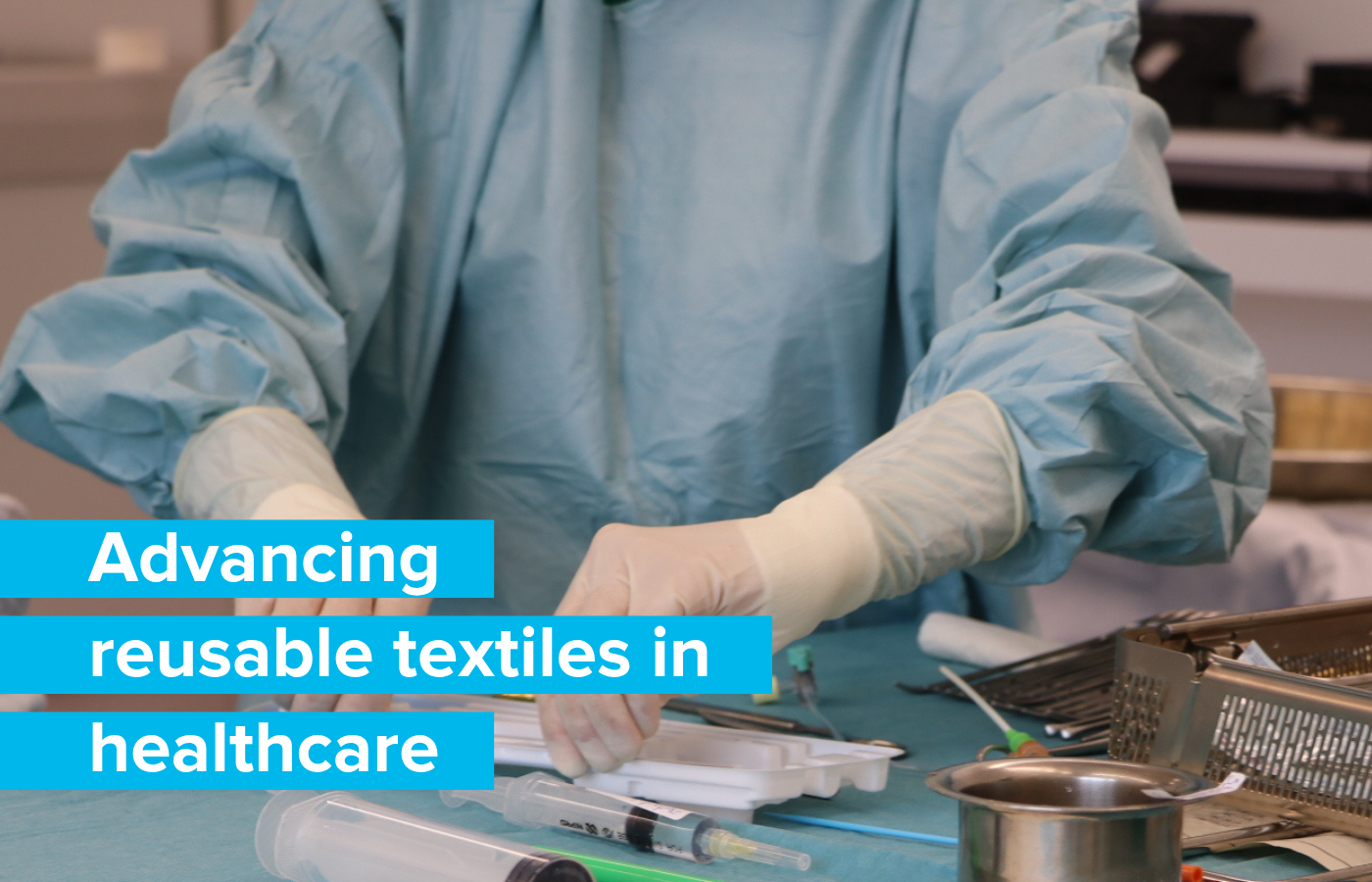
As part of the initiative, Health Care Without Harm developed a free online course and the Medical Textiles Tool to help healthcare institutions identify opportunities to transition from single-use to reusable textiles.
Four pilot hospitals, all members of the Global Green and Healthy Hospitals (GGHH) network, applied these approaches in different healthcare settings.
Their experiences, documented in a new technical report, show that reusable alternatives can maintain high clinical performance standards while reducing costs, strengthening supply resilience, and cutting healthcare waste. Just as importantly, they demonstrate how sharing practical experience across the GGHH network can help other healthcare institutions accelerate their own transition.
Lesson 1: Start with data to identify the biggest opportunities
Fundación Santa Fe de Bogotá in Colombia began by measuring its environmental footprint and analyzing waste generated in its operating rooms, identifying disposable medical textiles as a priority area for action.
Working across environmental management, procurement, sterilization, and occupational health, the hospital used the Medical Textiles Tool to evaluate reusable alternatives for surgical gowns and drapes. The assessment identified the potential to save more than USD 130,000 annually by reducing the cost per use by 30% and strengthening collaboration across departments, while also embedding sustainability more deeply into clinical decision-making.
Lesson 2: Build multidisciplinary ownership from the beginning
At Dr. João Amorim Center for Studies and Research (CEJAM) in Brazil, the transition became an organization-wide effort involving 31 professionals from purchasing, nursing, sterile supply, laundry, infection prevention, environmental services, and other departments.
Together, they evaluated environmental, economic, social, and biosafety criteria to identify four priority products for replacement, representing 62% of disposable textile-related plastic waste. By the end of 2026, CEJAM expects to prevent more than 69,000 kilograms of waste through reusable alternatives while strengthening collaboration and shared ownership across the organization.
Lesson 3: Invest in people, not just products
Building on lessons learned during the COVID-19 pandemic, Saint Paul's Hospital of Iloilo in the Philippines combined technical assessment with staff education and engagement to expand the use of reusable textiles.
By investing in communication, workshops, and training, the hospital built confidence in reusable alternatives, achieving 90% replacement of surgical gowns and 100% replacement of surgical caps. In 2025 alone, the initiative reduced organizational waste by 67% while lowering procurement costs for these products by 45%.
Lesson 4: Turn challenges into long-term innovation
Great Ormond Street Hospital's transition to reusable textiles began during the COVID-19 pandemic, when global shortages of disposable PPE threatened the continuity of surgical services.
By rapidly adopting reusable gowns, this hospital in the United Kingdom maintained uninterrupted patient care while achieving 20% cost savings compared with disposable alternatives. Building on that experience, the hospital is now expanding reusable solutions to additional products, including table covers and head drapes, using the Medical Textiles Tool to support evidence-based decision-making.
Learning together to accelerate change
There is no single pathway to reducing single-use textiles. Some institutions begin with data, others with multidisciplinary collaboration, staff engagement, or operational necessity. Together, these experiences show that reusable textiles can reduce waste and costs, strengthen supply resilience, and support high-quality patient care.
By sharing practical experience and lessons learned across the GGHH network, members are helping one another accelerate the transition toward more sustainable healthcare systems that protect health by protecting the planet.